Samsung is set to invigorate the smartglasses segment with several products. It has collaborated with Qualcomm, Google, Gentle Monster, and Warby Parker on intelligent eyewear, and the company is also working on Galaxy Glasses.
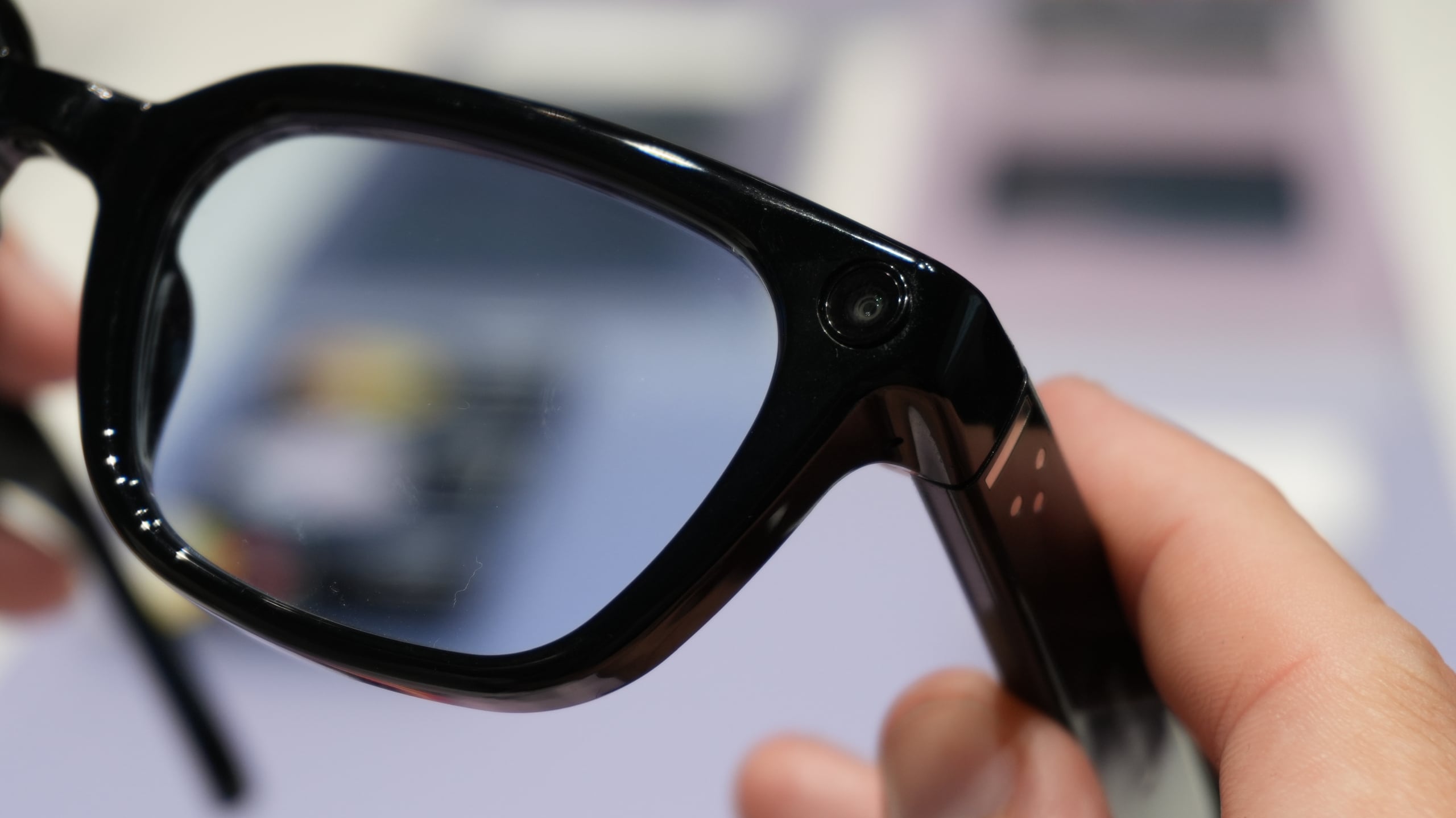
Privacy has become a sticking point for these products, as they allow for photo and video capture rather secretly. While they do have an LED on the front, it's often not as recognizable, particularly if the person is capturing from further away.
Samsung has already started messaging its privacy focus ahead of these products being launched. Its products will also have an LED to show that the glasses are recording. They can't record if the user isn't wearing them and wear detection automatically disables recording if the user removes the glasses. The recording feature is also disabled if the external LED indicator is blocked.
While these efforts are commendable, they don't fully satisfy the privacy concerns that are consistently being raised. While taping the LED indicator would disable recording, people have already figured out workarounds on other devices which allow for the LED to be obstructed without impacting the recording functionality. It stands to reason that similar workarounds will also be tried for Samsung's products.
The concerns are serious enough that lawmakers are taking notice. California's Senate Bill SB 1130 seeks to make illegal the use of a wearable device to capture sound or video of any person in a place of business where they have a reasonable expectation of privacy. It also seeks to make it illegal to manufacture or sell products that disable the indicator, with violators being fined up to $2,500.
The bill is making its way through the legislature and once passed, it will become law. Once it does, it's likely that other states may follow with their own legislation. This matters enormously for Samsung, as the regulatory environment for a product it hasn't shipped a single unit of is being tightened.
Conscientious users would then have to live with the potential ramifications of a violation in the back of their mind as they use these glasses out and about. For example, using live AI features in a public setting which require the camera and the LED light to be active might get construed by someone as recording without consent, potentially leading to arguments.
Imagine having AI help you through the menu in a diner. People on the next table might take issue because they'd think they're being recorded without consent. The user could face an awkward situation. That is not the experience any smartglasses product is designed to deliver, and it is not the experience any marketing campaign is going to successfully frame as manageable.
There's an argument to be made that stopping innovation isn't the answer to these valid privacy concerns. If tech enables these issues, then it's tech that should find a way forward. There will inevitably be more pressure on companies like Samsung making these products to find an acceptable solution.
However, it appears that while the industry acknowledges the problem, no shared standards are being deliberated. So it should not come as a surprise that with the current lack of an industry conversation, the government is happy to convene that conversation on its own terms and write the outcomes into the penal code.
Samsung is not Meta. It did not spend years selling glasses that generated the kind of documented misuse that has led to governments considering these steps.
While its initial privacy messaging has been instinctively right and on point, the problem is that the right instincts will prove insufficient to the scale of public concern that already exists. California did not wait for Samsung's approach to show that it's willing to throw the force of the law behind this.
Whether SB 1130 passes and becomes law before Samsung's glasses launch, or whether it is enacted shortly after, the direction of travel is clear enough. California's laws on technology and privacy have consistently served as templates for other states, and sometimes for other countries.
The regulatory environment around camera-equipped wearables is tightening, and it is tightening in direct response to a category Samsung is betting a significant portion of its next hardware chapter on.





 Loading ...

