
Related News
How to make Galaxy S26 Ultra Privacy Display adapt to your daily routine




Posted by - support -
on - 1 hour ago -
Filed in - Technology -
-
14 Views - 0 Comments - 0 Likes - 0 Reviews
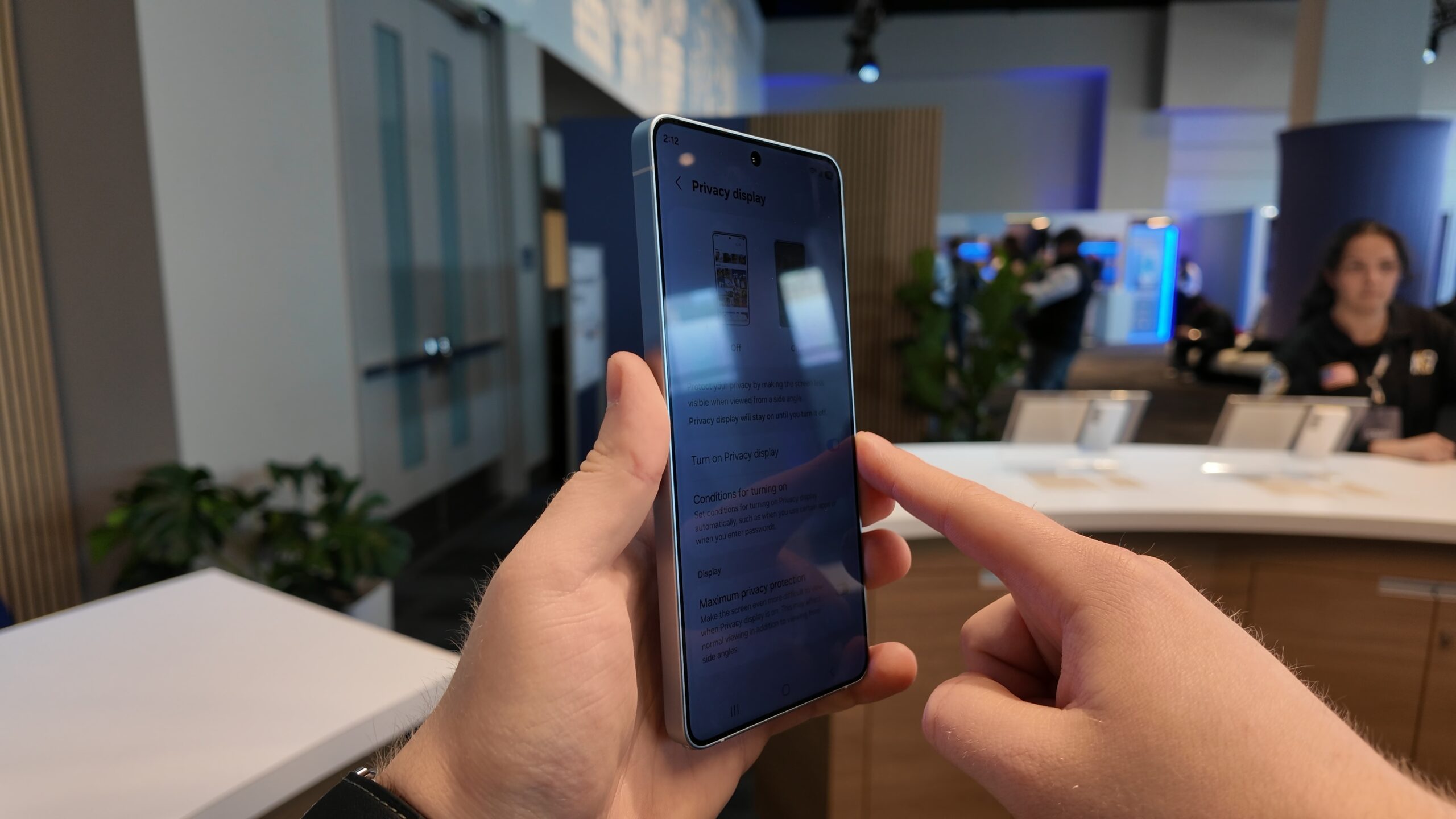
Privacy Display is a standout feature that is exclusive to the Galaxy S26 Ultra and makes your screen harder to read from the side, keeping your content private from people around you.
Samsung has given it a decent set of built-in customization options. But if you want more control over when it automatically turns on and off, you need to be using Samsung's Modes and Routines app.
Before getting into Routines, it is worth knowing what you can already do without them. Privacy Display has a few built-in activation conditions you can configure from the Settings > Display > Privacy Display > Conditions for turning on menu:
These options cover most everyday situations. But they are all based on what you are doing on the phone, not on where you are or what is happening around you. That is where Modes and Routines comes in.
Modes and Routines is a Samsung app that lets you automate your phone's behaviour based on conditions like your location, Wi-Fi connection, time of day, or battery level. You can find it by searching for it in Settings, opening the app directly from your app drawer, or long pressing the Modes button in the quick panel.
A Routine is made up of two parts: an “If” condition that triggers the routine, and a “Then” action that the phone carries out when that condition is met. For Privacy Display, you are setting up routines where the condition is something like “I left home” and the action is “turn on Privacy Display.” As soon as the condition clears â like when you get back home â Privacy Display turns off on its own.
This is probably the most useful routine you can set up. It means Privacy Display is always off when you are at home and always on when you step out.


You can use your Wi-Fi network as the trigger instead of your physical location, especially if GPS is not always reliable for you indoors.


If your routine is predictable â you commute at roughly the same time each morning and evening â a time-based trigger is the simplest option.


These same routines work for any location or network that you regularly visit or use. Arriving at the office, connecting to a public Wi-Fi network, or reaching any other place where privacy matters — the setup is identical, just with a different location or network as the trigger.
What's more, these routines are just a few ways you can automate Privacy Display. There are many more conditions you can use. For example, when a Bluetooth device (like your Galaxy smartwatch or earbuds) is disconnected from your phone or you get an incoming call.
It's also worth noting that Modes and Routines works independently of the built-in Privacy Display conditions. The two systems do not conflict and your app-based and PIN-based triggers will work alongside any routines you create.
Finally, if you ever want to temporarily override a routine â say you away from home but want Privacy Display off for some reason â you can always toggle it manually from the quick panel. This will not pause the routines you have set up, just ingore them until the set conditions are met again.
At our community we believe in the power of connections. Our platform is more than just a social networking site; it's a vibrant community where individuals from diverse backgrounds come together to share, connect, and thrive.
We are dedicated to fostering creativity, building strong communities, and raising awareness on a global scale.


 Loading ...

